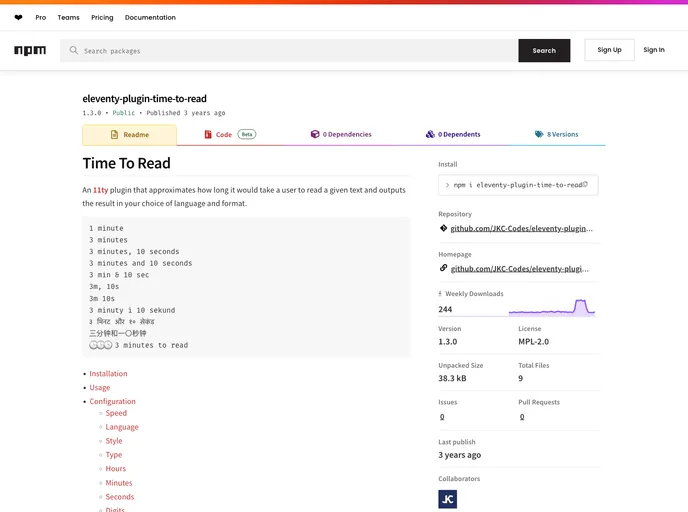
An 11ty plugin for calculating the time to read a given text
Time To Read is a versatile Eleventy plugin designed to help users gauge how long it will take to read a specific piece of text. With its simple integration and customizable settings, it offers an effective way to provide readers with an estimated reading time tailored to their preferences. Whether you’re running a blog or a content-heavy site, this plugin enhances user experience by keeping readers informed and engaged.
The plugin supports various languages and formats, allowing for a wide range of applications. Users can easily configure it to match their style, whether they prefer more detailed descriptions or concise estimates. This flexibility makes the plugin a valuable tool for content creators who want to improve their website’s accessibility and usability.
Installation: Quick and easy to set up through the Eleventy config file (.eleventy.js) and integrates seamlessly with template engines, such as Liquid.
Configuration Options: Users can tailor the reading time calculation speed using specific formats, such as characters or words per minute, according to their audience’s reading habits.
Language Support: Offers support for multiple languages using the Internationalisation API, making it globally applicable and user-friendly for diverse readers.
Customizable Output Style: Choose from different output styles—’narrow’, ‘short’, or ’long’—to match the design and tone of your content.
Dynamic Time Representation: Options to show or hide hours, minutes, and seconds based on the length of the text, ensuring clarity and relevance in the reading time display.
Adjustable Precision: Set the minimum number of digits to display in the reading time, allowing for a clean and professional appearance regardless of the duration.
Custom Output Function: A callable function allows for complete control over how the reading time is presented, enabling tailored solutions for different content types.
User-Focused Design: Provides a clear indication of the reading time, helping to set reader expectations and promote better engagement with lengthy articles.