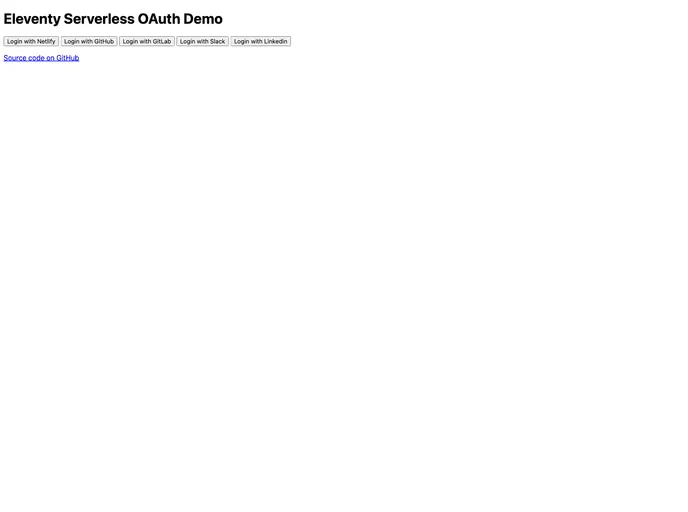
A demo project using OAuth to secure some of your Eleventy Serverless routes.
Overview
The demo project utilizing Eleventy Serverless with OAuth integration serves as an excellent resource for developers looking to enhance the security of their applications. By leveraging popular OAuth providers such as Netlify, GitHub, GitLab, Slack, and LinkedIn, this project offers a streamlined approach to ensure secure serverless routes. Whether you are deploying to Netlify or running locally, the project accommodates various configurations suitable for different development environments.
This demo not only supports a full login flow on localhost, making it versatile for testing, but it also provides clear guidelines on setting up OAuth applications, managing environment variables, and implementing secure serverless templates. This comprehensive approach makes it an ideal option for developers aiming to integrate OAuth with Eleventy.
Features
- Multiple OAuth Providers: Supports integration with various providers, allowing flexibility in choosing the ones that fit your project’s needs.
- Local Development Support: Full OAuth login flow accessible on localhost, ensuring ease of testing and development without complex setups.
- Environment Variable Management: Simplifies the integration process with clear instructions for adding necessary environment variables for each OAuth provider.
- Secure Serverless Templates: Offers the ability to secure serverless templates using front matter, enhancing the safeguarding of your application’s routes.
- Dynamic Content Rendering: Facilitates conditional rendering within serverless templates based on user authentication status, adding a personalized touch to user experiences.
- Easy Deployment with Netlify: Clear guidance for deploying the application on Netlify, including tips for setting up multiple redirect URIs for production and development environments.
- Static Login Forms: Allows integration of static login forms, which can be included across shared headers in your Eleventy site, improving user accessibility.